18 November 2026
We’re happy to share the Strategic Plan 2027–2031 for the Paediatric Society of New Zealand | Te Kāhui Mātai Arotamariki o Aotearoa (PSNZ | Arotamariki). It sets our direction for the next five years. Our vision stays the same: tamariki in Aotearoa flourish in health and wellness.
PSNZ and Arotamariki
Our shortened names, PSNZ and Arotamariki, are now being used interchangeably. Using them both reflects our identity as a bicultural, equity-focused organisation with Te Tiriti o Waitangi as the foundation of our mahi.
You’ll see our organisation called Arotamariki more often in the future, including throughout the new strategy. Whichever name you see, it reflects the same Society and the same commitment to the health and wellbeing of tamariki and rangatahi. Please feel free to use both names throughout your own communications moving forward.
Shaped by our members and lived experience
Our new strategy was developed at an in-person, independently facilitated workshop earlier in the year. It brought together members from across Arotamariki, from different disciplines, roles and regions, along with lived experience representation. Because so many perspectives were in the room, the strategy reflects what Arotamariki has grown into: a national, multidisciplinary membership organisation with a shared commitment to child and youth health.
.png)
The new strategy builds on our previous direction. We have kept our deliberate focus on improving outcomes for tamariki Māori and on addressing health inequities. We have also strengthened our commitment to Te Tiriti o Waitangi, lived experience, advocacy, partnership, workforce development and evidence-informed practice.
What’s in the strategy
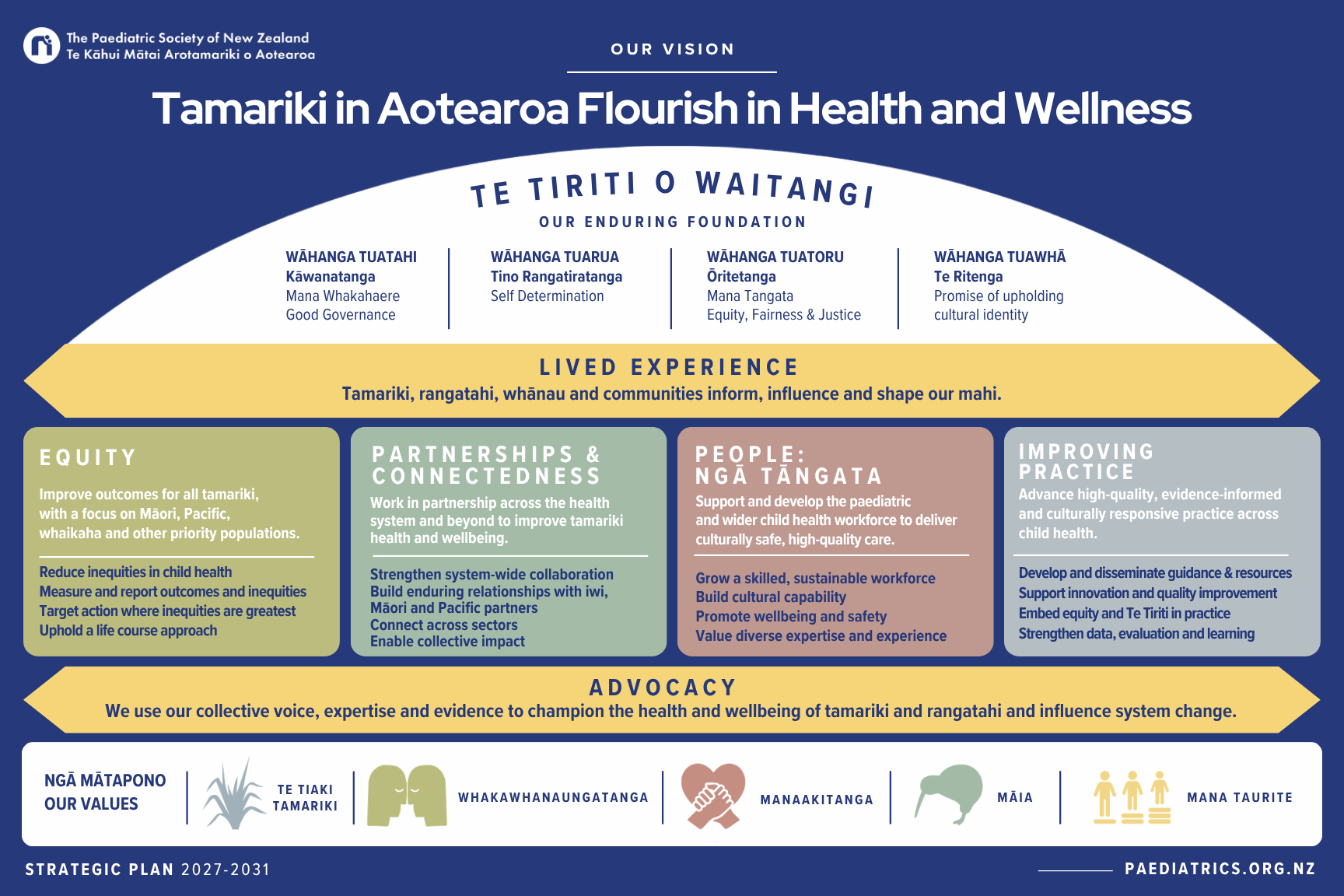
Te Tiriti o Waitangi is our enduring foundation. It shapes how we govern, lead, partner, set priorities and carry out our mahi. Four wāhanga guide that approach: Kāwanatanga, Tino Rangatiratanga, Ōritetanga and Te Ritenga.
Lived experience voices inform and shape our mahi. Tamariki, rangatahi, whānau and communities have knowledge that clinical expertise, research and data can’t provide on their own. Lived experience isn’t a separate programme or a one-off consultation. It is integrated and informs our work across the whole organisation.
Four interconnected strategic priorities guide where we’ll focus our effort:
- Equity: improving outcomes for all tamariki, with a focus on Māori, Pacific, whaikaha (disabled) and other priority populations.
- Partnerships & Connectedness: working in partnership across the health system and beyond, including with iwi, Māori and Pacific partners and sectors like education and social services.
- People | Ngā Tāngata: supporting and developing a skilled, sustainable and culturally safe child health workforce, and making sure membership and representation are equitable across disciplines and regions.
- Improving Practice: advancing high-quality, evidence-informed and culturally responsive practice, wherever tamariki live or enter the health system.
Advocacy has been included in the new strategy and is how we use our collective voice, expertise and evidence to champion the health and wellbeing of tamariki and rangatahi and to influence system change.
Ngā Mātāpono | Our Values underpin how we work: Te Tiaki Tamariki, Whakawhanaungatanga, Manaakitanga, Māia and Mana Taurite.
From strategy to action
We’ll put the strategy into practice through our programmes and partnerships. These include the Child & Youth Health National Clinical Network, KidsHealth, our Special Interest Groups, our work on child and youth health epidemiology and evidence, and our advocacy and policy engagement. We’ll monitor progress through regular reporting and governance oversight. We’ll measure success by what we do and also by the difference it makes for tamariki, rangatahi and whānau.
Thank you!
Thank you to everyone who gave their time, knowledge and experience to shape this strategy. Special thanks go to the lived-experience representatives, whose voices helped ground our priorities in what matters most to tamariki and whānau.
Read the full Strategic Plan 2027–2031